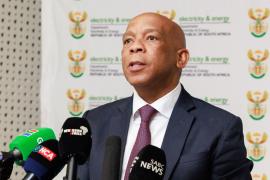
Government has proposed a set of measures aimed at reducing the high cost of electricity while ensuring that tariffs remain cost-reflective and that vulnerable households and strategic economic sectors are protected.
The measures are reflected in South Africa’s Revised
Electricity Pricing Policy, which Cabinet approved for public comment last month.The policy updates the 2008 Electricity Pricing Policy to reflect developments in the electricity supply industry, including ongoing market reforms linked to the unbundling of Eskom and the implementation of the Electricity Regulation Amendment Act, 2024.
It establishes national principles and tariff-path certainty, provides a framework for transparent, efficient and cost-reflective tariffs, guides the National Energy Regulator of South Africa (NERSA), Eskom and municipalities, aligns prices with a competitive market, and strengthens social protection and accountability.
“Over a period stretching back to 2007, electricity tariffs have increased by about 977%. A number of things have changed since that period, and that is a trigger as to why we are presenting this set of proposals before you,” Ramokgopa said on Tuesday in Pretoria at a media briefing.
Ten-year price forecast
The Minister said the policy seeks to establish a tariff path that will provide some certainty on the cost of electricity over the next 10 years.
“It is for this reason that, as part of this Electricity Pricing Policy, NERSA will be required to publish a 10-year price forecast. This is important because, for heavy industries, when people want to make significant investments in the South African economy, and they're investing in a sector that relies on electricity, they want to compute their return on investment. If electricity is a big part of the input cost, you need to have an appreciation of what the price path looks like,” Ramokgopa said.
The pricing policy will provide a framework for transparent and efficient cost-reflective tariffs to avoid hidden costs being included in electricity tariffs.
Once adopted, the policy will guide the work of NERSA, Eskom, municipalities and other actors across the electricity ecosystem.
Open the market to competition
As part of reforms in the sector, government is liberalising the electricity market to ensure that Eskom is no longer a monopoly and to introduce greater competition.
“By that I mean, as you know, as part of our comprehensive set of reforms, we're introducing new generators. We're going to allow a bilateral arrangement, where someone who is a generator can enter into an agreement with someone who is an off-taker.
“Off-takers are entering into bilateral arrangements outside the realm of Eskom for the supply of electricity. That means that there's a set of rules that must govern this new dispensation,” the Minister said.
Ramokgopa said South Africa is moving towards a wholesale electricity market.
“So, this policy extends beyond what has been the traditional ecosystem of electricity in the country, because that was really Eskom-heavy and municipality-predisposed,” the Minister said.
Strengthening social protection
He emphasised that the Electricity Pricing Policy will strengthen social protections.
“So, the support we are providing to the poor, the indigent and the vulnerable, will articulate most comprehensively what these kinds of support are that we are providing to these vulnerable communities,” Ramokgopa said.
The Minister explained that Eskom debt increases when consumers do not pay municipalities and, in turn, municipalities do not pay Eskom.
The current tariff structure enables Eskom to recover municipal debt through the tariff.
“If you look at the current tariff, anything between 1% to 2.5% of the tariff that you are paying is on the basis that Eskom is unable to recover what the people are owing, and municipalities, they put in the cost of supply studies the fact that they are being owed a lot of money and then it means that they are putting additional pressure on diligent consumers. In terms of this policy, that's not allowed,” the Minister said.
Ramokgopa said the policy will enable action against those who do not pay for electricity and those who are illegally connected to the grid.
“We are insisting that the provider of electricity must be efficient. And when it is efficient, you will see that the price of electricity will not be what we are currently charging,” he said.
Free basic electricity
The Minister said there will also be an intervention on free basic electricity for indigent households.
“We're also going to modernise free basic electricity administration. We'll establish a central and nationally accessible free basic electricity database. With the new age of technology, we're able to have that database in place.
“That is possible because we integrate this database with existing databases of Home Affairs and also with the social grant databases, so there's a good chance that someone who qualifies for the social grant will also qualify for free basic electricity,” he said.
Support for energy intensive industries
Government is also introducing, through the Electricity Pricing Policy, a Negotiated Pricing Agreement instrument to support industries that rely heavily on electricity.
“The current articulation of the Negotiated Pricing Agreement only triggers to qualify for, or to make an effort to qualify for, a negotiated price agreement when you are in distress.
“We're also introducing another criterion. This could be industries that are not in distress, but if they were to get concessional funding, they're able to support the national interest in that they'll be able to accelerate the growth in the priority sectors of the economy; they'll be able to create employment. We're using it as a pre-emptive strike to rejuvenate the South African economy,” the Minister said. -SAnews.gov.za

No comments:
Post a Comment